
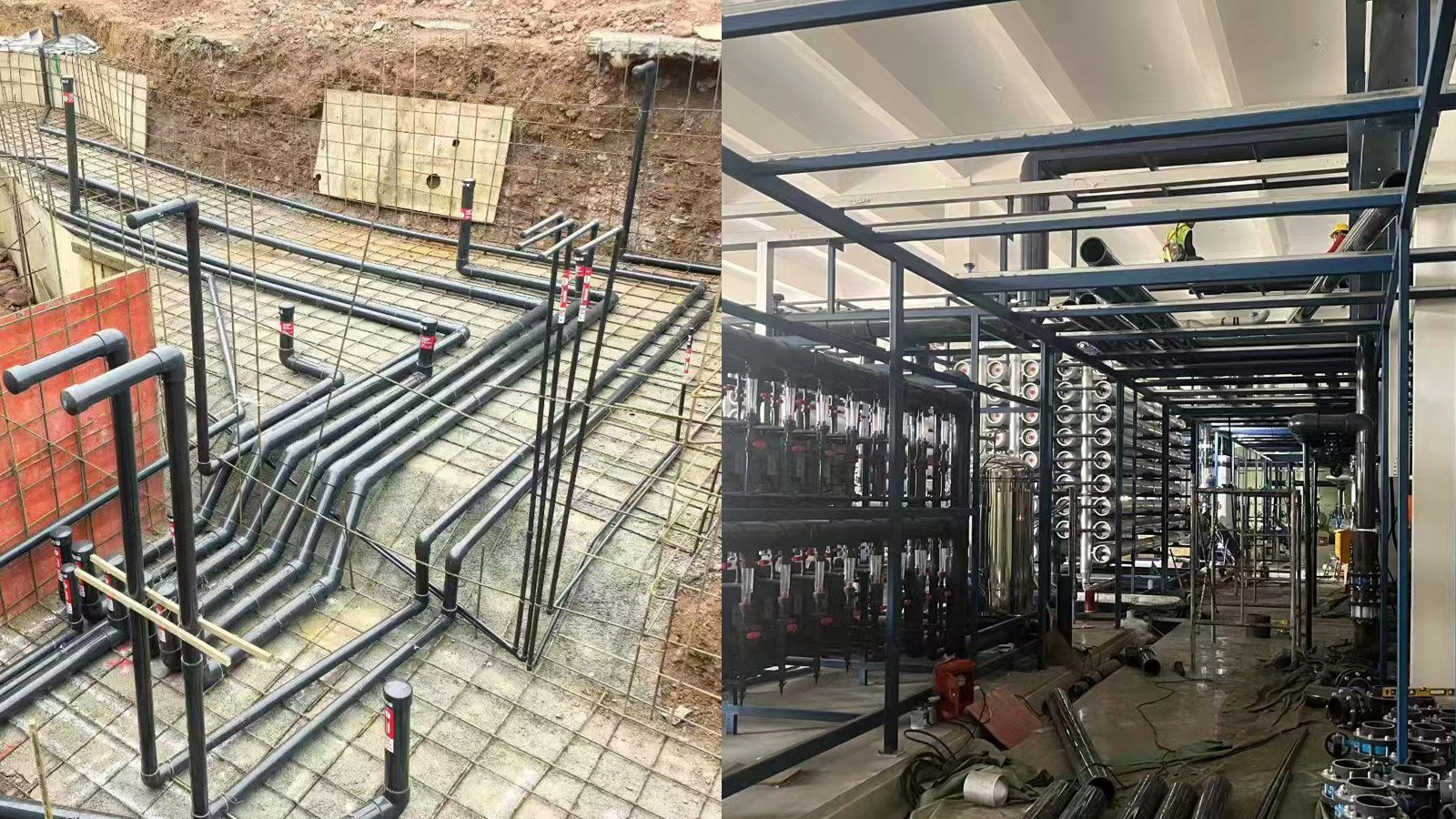
I. Core Basics of UPVC Pipe Fittings:
A. Material Characteristics: UPVC (unplasticized polyvinyl chloride) pipe fittings are corrosion-resistant (against acids, alkalis, and salts), lightweight, and have good insulation properties. They are not resistant to high temperatures (long-term use temperature ≤ 60°C) and are prone to brittleness at low temperatures (special care needed below -10°C).
B. Applicable Scenarios: Mainly used for water supply and drainage (cold water), chemical pipelines, and building wiring conduits. They are prohibited for use in hot water pipelines (as they are prone to deformation and aging).
1.Potable water (cold water) applications
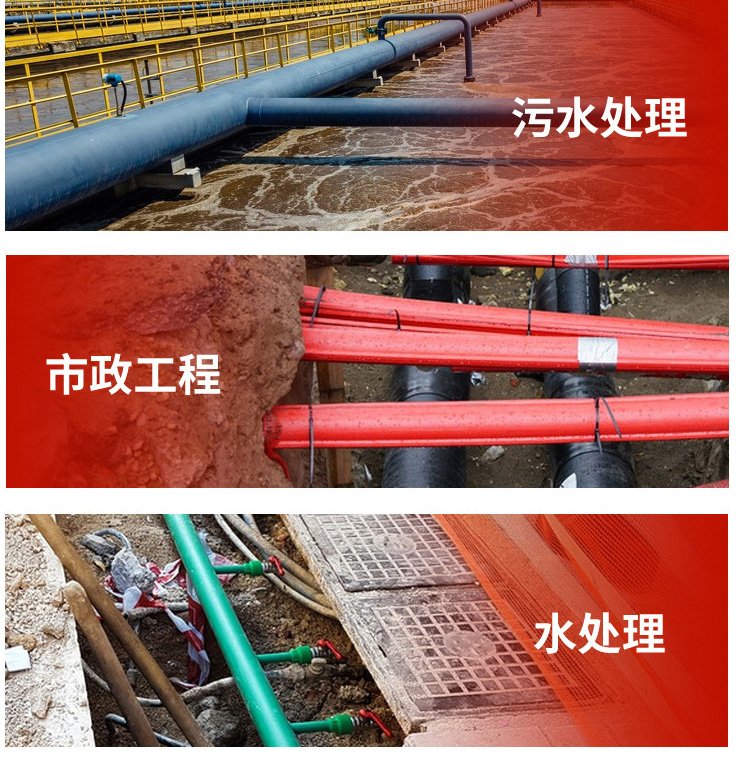
2.Industrial-grade application scenarios
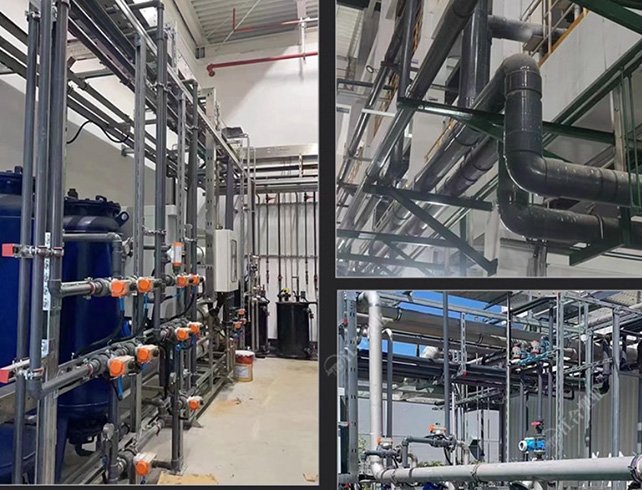
II. Key Technical Parameters
A. Pressure Rating: Common grades are PN1.0/1.6 MPa (corresponding to working pressures of 10/16 kg/cm²). It must match the pipeline system pressure to avoid overpressure and leakage.
B. Specifications and Sizes:
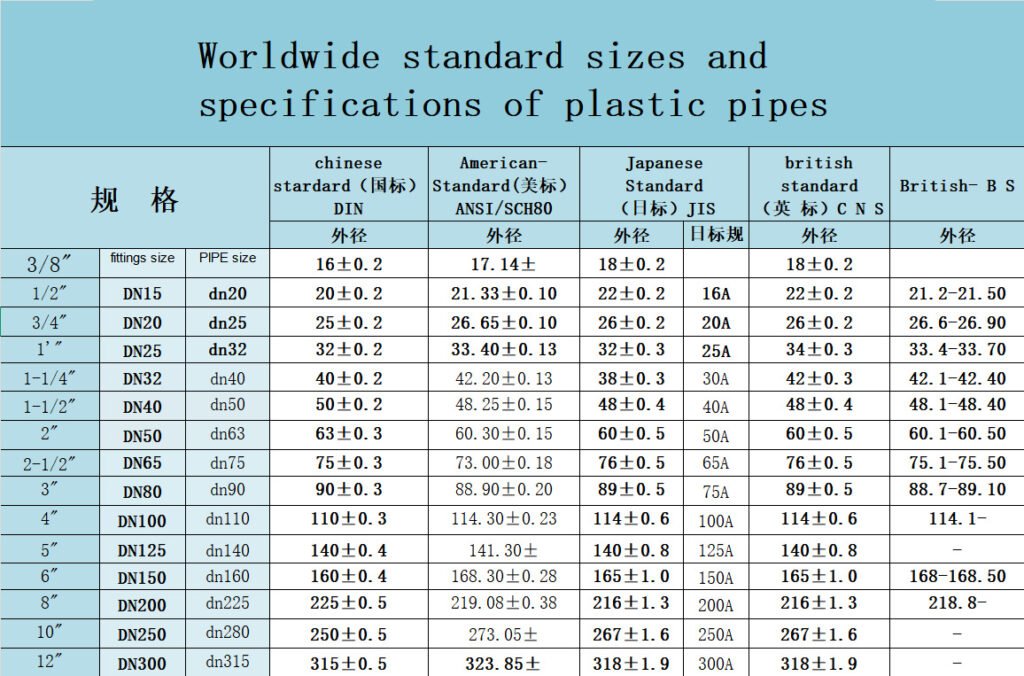
1)Nominal Diameter (DN): DN15/20/25/32/40/50/63, etc. (corresponding to common imperial sizes such as “1/2”, “3/4”, “1” …).
II. Key Technical Parameters
A. Pressure Rating: Common grades are PN1.0/1.6 MPa (corresponding to working pressures of 10/16 kg/cm²). It must match the pipeline system pressure to avoid overpressure and leakage.
B. Specifications and Sizes:
- Nominal Diameter (DN): DN15/20/25/32/40/50/63, etc. (corresponding to common imperial sizes such as “1/2”, “3/4”, “1” …).
- Wall Thickness Grade (SDR): SDR11/SDR16, etc. A smaller SDR indicates a thicker wall and higher pressure-bearing capacity.
C. Connection Methods: - Solvent Cement Joint (Commonly Used): Requires dedicated UPVC solvent cement. The interface must be smooth and burr-free, and the joint should remain undisturbed to cure after cementing.
- Flanged Connection (For Large Diameter/High-Pressure Scenarios): Bolted fixation provides more stable sealing performance.
- Threaded Connection (For Small Diameter): Requires dedicated threaded fittings. Avoid excessive force during tightening to prevent cracking.
III. Quality Assessment
- Appearance: The surface should be smooth, free of bubbles, impurities, or cracks, with uniform color (common colors: white/grey/dark grey).
- Wall Thickness Uniformity: Measure with calipers. Wall thickness deviation in any given cross-section should be ≤ 10% to avoid compromised pressure capacity due to substandard manufacturing.
IV. Installation and Usage Notes
- Installation Environment: Keep away from high-temperature sources (e.g., water heaters, radiators). Outdoor use requires sun protection (e.g., wrapping with insulation). Avoid forceful impacts during installation in low-temperature environments.
- Cutting and Processing: Use a dedicated pipe cutter. Ensure the cut is perpendicular to the pipe axis and remove burrs before connection.
- Compatibility: Use only with UPVC pipes/fittings. Do not connect directly with other materials like PE or PPR (use transition fittings if necessary).
- Maintenance: Regularly inspect joints for leaks. For chemical pipelines, replace periodically based on the properties of the conveyed medium.
V. Common Issues and Mitigation
Leakage: Often caused by unclean joints, uneven solvent cement application, or water flow before full curing. Solution: Strictly follow the cementing procedure; allow curing time ≥ 24 hours.
Cracking: Caused by impact at low temperatures, overpressure operation, or insufficient wall thickness. Solution: Select fittings with adequate pressure margin; handle gently during winter installation.
Blockage: Caused by residual debris in pipes or insufficient slope. Solution: Clean pipes before installation; ensure a minimum slope of ≥ 3‰ for drainage pipes.