Contact HighSight Team


You will get reply within 48 hours.
Your email ID will not be used for any other purpose.
Your email ID will not be used for any other purpose.
You can email us directly. Our email address: elaine@chinahighsight.com

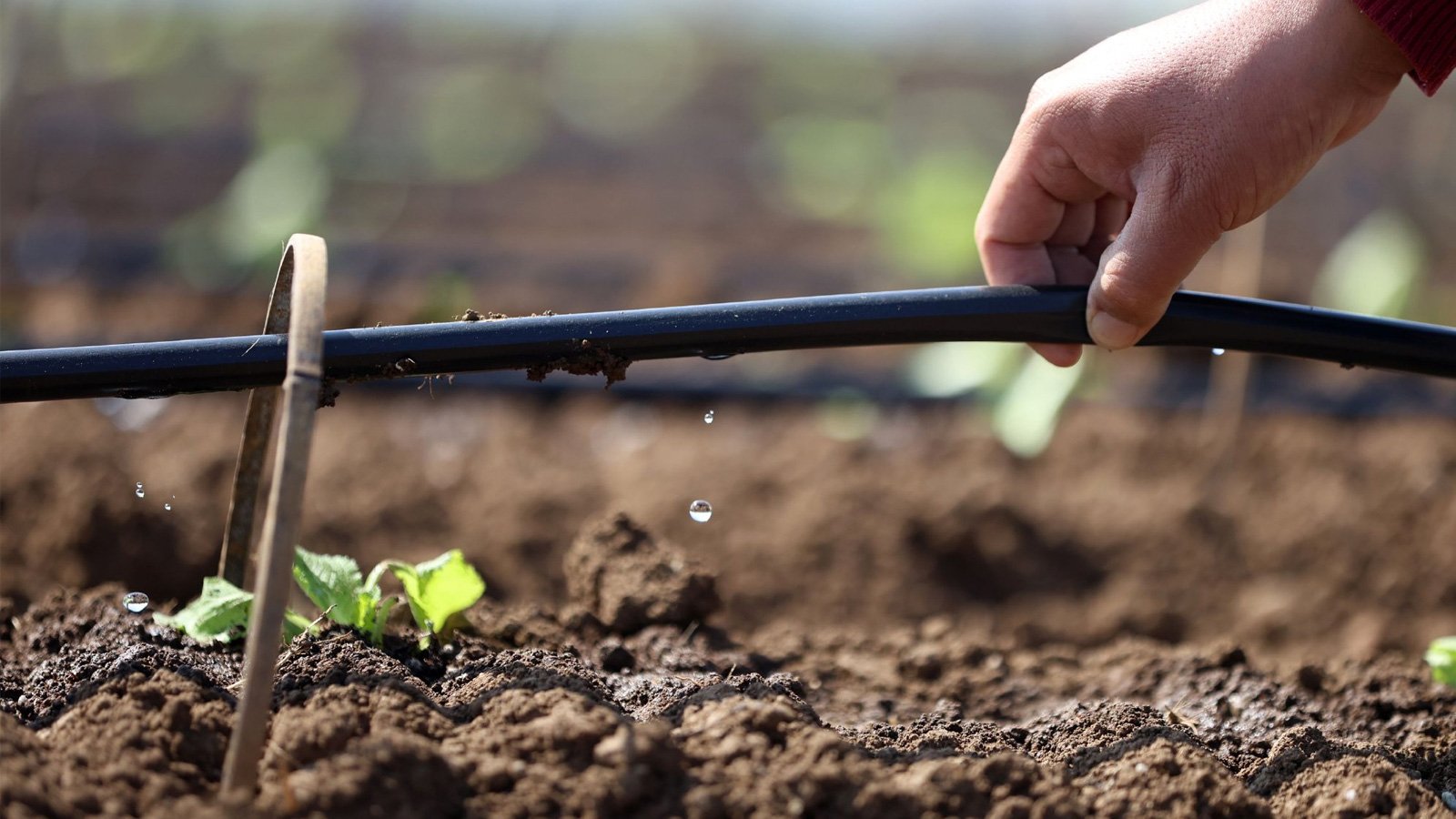
In agricultural production, the efficient utilization of water resources has always been a critical task. A precise water supply method has emerged to address this need. It primarily utilizes a low-pressure pipeline system and specialized emitters to deliver water and nutrients required for crop growth uniformly and accurately to the soil surface or soil layer near the crop root zone at a low flow rate. This method avoids the significant evaporation and seepage losses common in traditional irrigation, maximizing water resource utilization.
Drip Irrigation technology is pivotal for maximizing crop yield while minimizing resource waste.
Implementing Drip Irrigation effectively can lead to substantial cost savings for farmers.
Drip Irrigation is essential for sustainable agriculture, especially in water-scarce regions.
Compared to other common water-saving irrigation methods like sprinkler irrigation and micro-sprinkler irrigation, this method offers unique advantages. While sprinkler irrigation also reduces evaporation and seepage, the water spray is susceptible to wind, leading to faster water loss, and it often involves higher equipment investment costs. Micro-sprinkler irrigation, which evenly sprays water around crops covering a larger area, is less precise than this method. However, it delivers water and nutrients directly to the root zone, enabling localized precise irrigation and significantly improving efficiency.
Farmers adopting Drip Irrigation can achieve higher quality produce with less water.
Drip Irrigation systems are designed for optimal nutrient delivery directly to the root zone.
The benefits of Drip Irrigation extend to improved soil health and reduced erosion.
Implementing a Drip Irrigation system can lead to increased resilience against drought conditions.
Adopting Drip Irrigation can significantly enhance water conservation efforts in agriculture.
Farmers can monitor and control water usage with precision through Drip Irrigation systems.
Using Drip Irrigation leads to lower labor costs associated with traditional irrigation methods.
Drip Irrigation is perfect for various crop types, from fruits to vegetables and grains.
Farmers can use Drip Irrigation to optimize their fertilization processes, enhancing crop growth.
Implementing Drip Irrigation allows for better soil moisture management across various terrains.
Drip Irrigation technology is adaptable to changing environmental conditions.
With the reduction in production costs for tapes and pipes, the application scope has expanded widely, progressing from initial use in cash crops to widespread adoption in field grain crops.
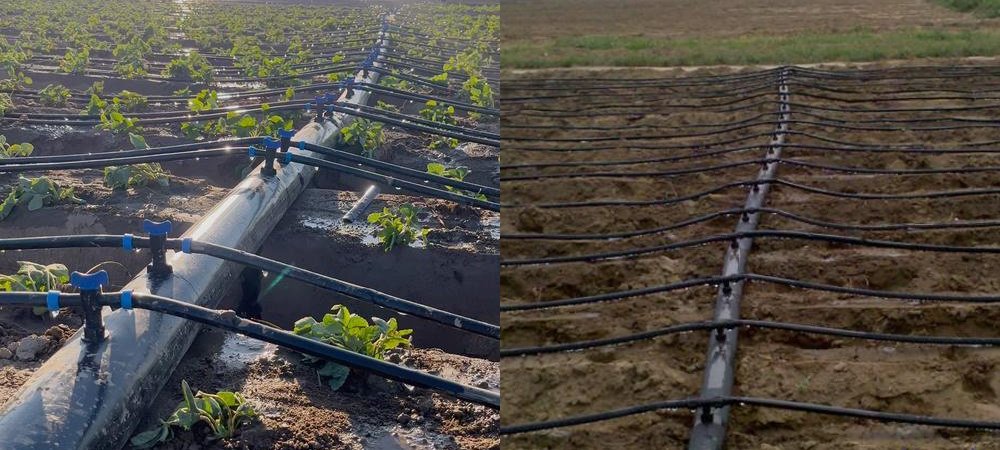
The working principle of this system is based on the operation of a complete system. It mainly consists of four parts: the water source project, the head control unit, the water distribution network, and the emitters.
By utilizing Drip Irrigation, farmers can ensure consistent crop yields even in unpredictable climates.
The water source project, which can be rivers, lakes, reservoirs, wells, or springs, supplies water to the entire system. The head control unit includes components such as water pumps, power units, filters, fertilizer injection devices, and control and measurement equipment. The pump and power unit lift water from the source to the required pressure. Filters prevent impurities in the water from clogging the emitters. Fertilizer injection devices dissolve fertilizer into the irrigation water, enabling integrated water and fertilizer application.
During the process, water is treated and pressurized at the head control unit after being drawn from the source. It is then conveyed through the distribution network to the emitters. Finally, the emitters deliver water slowly, drop by drop, into the soil near the crop roots, providing a continuous and stable supply of water and nutrients.
During the process, water is treated and pressurized at the head control unit after being drawn from the source. It is then conveyed through the distribution network to the emitters. Finally, the emitters deliver water slowly, drop by drop, into the soil near the crop roots, providing a continuous and stable supply of water and nutrients.
(I) Fruit Tree Cultivation
This method offers significant advantages in fruit tree cultivation. Fruit trees typically have deep root systems requiring adequate water supply, but over-irrigation must be avoided to prevent root hypoxia and disease. It can precisely deliver water and nutrients to the root zone according to the growth stage and water requirements of the trees. For example, applying this technology in apple orchards can significantly improve apple yield and quality. It helps maintain stable soil moisture, reducing fruit cracking, while also enhancing fruit sugar content and color.
(II) Vegetable Cultivation
Vegetable cultivation has strict requirements for water and nutrients. This method can provide precise irrigation and fertilization for vegetables. Its advantages are even more pronounced in greenhouse vegetable cultivation. It can reduce humidity inside the greenhouse, lowering the incidence of pests and diseases, while increasing vegetable yield and quality. For instance, in tomato cultivation, this technique can shorten the growth cycle, produce more uniformly sized fruits, and improve taste.
(III) Field Grain Crop Cultivation
With the advancement of this technology and cost reduction, its application in field grain crop cultivation is becoming increasingly widespread. For crops like wheat and corn, it can improve water use efficiency and reduce irrigation water waste. Furthermore, it can be combined with fertilization to achieve integrated water and fertilizer management, improving fertilizer utilization efficiency and promoting the growth and yield increase of grain crops.
This method can enhance agricultural productivity and sustainability.
(I) Remarkable Water-Saving Effect
By delivering water directly to the crop root zone, this method avoids evaporation and seepage losses, greatly improving water use efficiency. Compared to traditional surface irrigation, it can save 50% to 70% of water. In arid and water-scarce regions, the water-saving effect of this approach is even more pronounced, effectively alleviating water resource shortages.
In conclusion, Drip Irrigation remains crucial in modern agriculture, fostering efficient water use.
(II) Enables Integrated Water and Fertilizer Management
Systems can be integrated with fertilizer injection devices, dissolving fertilizer into the irrigation water to achieve integrated water and fertilizer application. This allows for precise delivery of water and nutrients to the root zone based on crop needs, improving fertilizer use efficiency and reducing waste. Additionally, integrated water and fertilizer management can help reduce soil compaction and salinization, improving soil structure.
(III) Adaptability to Complex Terrain
This method uses plastic pipes for water conveyance. The pipes are lightweight, the system structure is simple, and installation is easy, making it adaptable to complex terrains. Whether in mountainous, hilly, or flat areas, systems can be conveniently installed. This enables the widespread application in farmlands under various topographical conditions.
(IV) Ease of Automation Control
This method is more easily automated and facilitates refined agricultural water management. By installing sensors and controllers, the system can automatically control the start/stop, irrigation volume, and timing based on factors like soil moisture, weather conditions, and crop demand. This saves labor costs and improves irrigation efficiency.
(I) Emitter Clogging Issue
Due to the small flow path cross-section of emitters, they are prone to clogging by impurities in the water. Once an emitter clogs, it affects the normal operation of the system, leading to insufficient water and nutrient supply for some crops. To address this, strict filtration of the water source is essential to remove impurities, sediment, algae, etc. Regular flushing and maintenance of the system are also necessary to promptly clean deposits from emitters and pipelines.
(II) Higher Requirements for Management Personnel
Automated systems require specialized personnel for operation and maintenance. Managers need to understand the system’s working principle, equipment performance, and operational parameters, be proficient in operating controllers and sensors, and promptly handle system faults. To improve the competence of management personnel, training can be strengthened to enhance their professional skills and management capabilities.
(III) Relatively High Initial Investment Cost
The initial investment cost for a system is relatively high, including expenses for equipment procurement, installation, and commissioning. This can be a significant burden for some small-scale farmers. To reduce investment costs, selecting cost-effective equipment is an option. Furthermore, governments can introduce relevant subsidy policies to encourage farmers to adopt this technology.
(I) Technological Innovation Driving Development
With continuous technological advancement, systems for this approach are also innovating and evolving. In the future, these systems will become more intelligent and automated, enabling more precise irrigation and fertilization.
(II) Expanding Application Scope
As this technology matures and costs decrease, its application scope will continue to expand. Beyond agriculture, it can be applied in landscaping, urban greening, and other fields. In landscaping, it can provide precise irrigation for flowers, trees, and other plants, enhancing aesthetic effects. In urban greening, it can save water resources and reduce the workload of manual irrigation.
(III) Policy Support Promoting Adoption
To address water scarcity, governments are increasingly emphasizing the promotion and application of water-saving irrigation technologies. In the future, more supportive policies are expected to encourage farmers and enterprises to adopt this method. These policies may include financial subsidies, tax incentives, and technical training, which will effectively promote the dissemination and application of this technology.
This method is an effective solution for modern agricultural practices.
In summary, this method offers significant water-saving effects and promising application prospects, though it also faces certain challenges. Through continuous technological innovation and policy support, this technology will find wider application in agriculture and other fields, making important contributions to the efficient use of water resources and the sustainable development of agriculture.
In conclusion, Drip Irrigation remains a vital practice in contemporary farming, continually evolving to meet the challenges of water conservation and crop management.