Contact HighSight Team


You will get reply within 48 hours.
Your email ID will not be used for any other purpose.
Your email ID will not be used for any other purpose.
You can email us directly. Our email address: elaine@chinahighsight.com

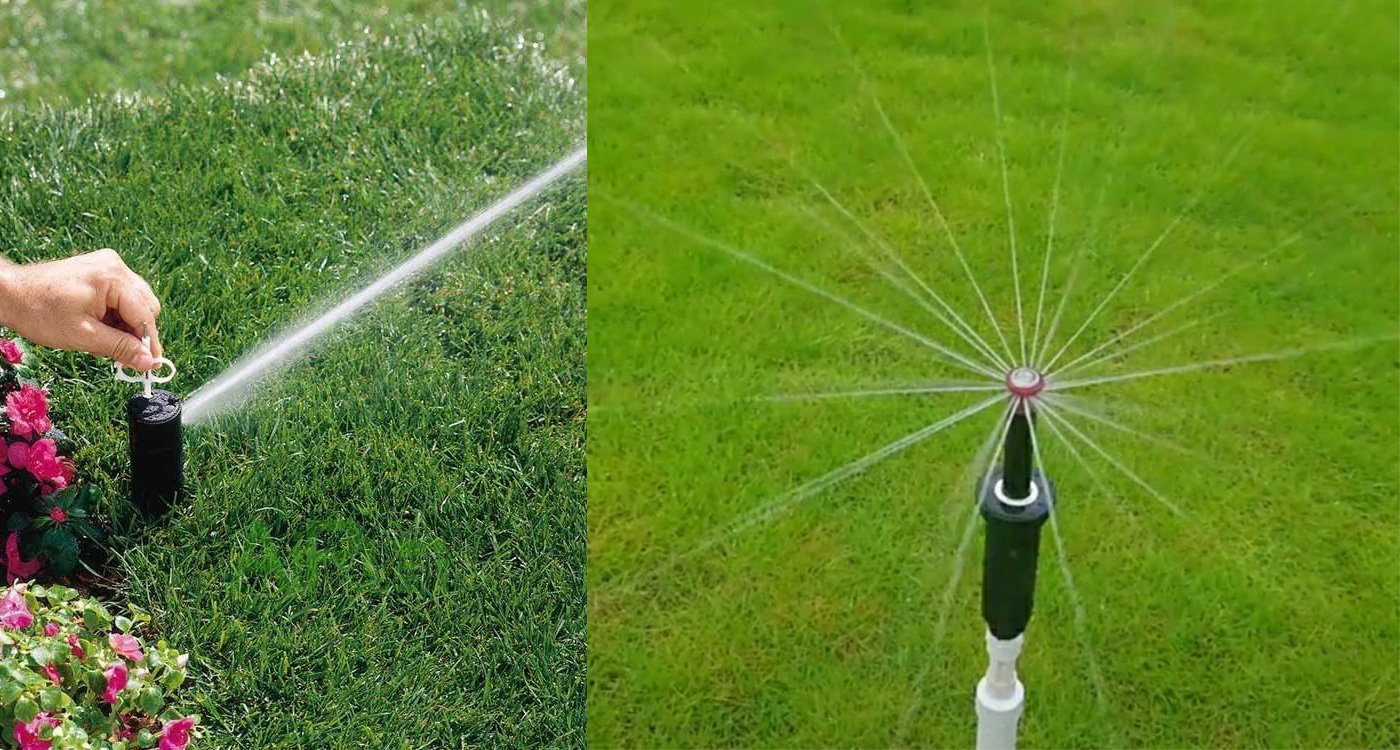
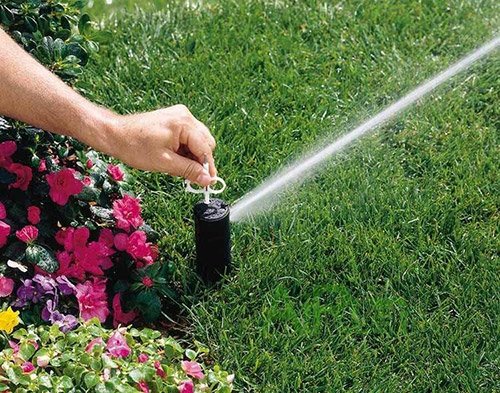
Buried sprinklers are concealed irrigation devices widely used in urban greening irrigation. Installed underground, they are launched by water pressure for irrigation. They have several key characteristics:
Overall, the integration of buried sprinklers into landscaping not only conserves water and saves labor but also enhances the beauty and health of outdoor spaces, making them a wise investment for any property owner.
Buried sprinklers have become increasingly popular due to their efficiency and effectiveness in maintaining lush green landscapes. Understanding their operation and benefits can greatly enhance the decision-making process for homeowners and landscaping professionals alike.
This feature not only reduces water waste but also promotes healthier plant growth by delivering water directly to the root zones of plants. By minimizing evaporation and runoff, buried sprinklers ensure that every drop counts.
Moreover, the concealment of these sprinklers means that they do not detract from the overall aesthetic of the landscape. This is particularly important in residential areas where curb appeal is a priority.
Properly designed buried sprinkler systems can lead to uniform irrigation across diverse terrains, ensuring that all areas receive adequate water regardless of their slope or exposure to the sun.
Water Conservation: Buried sprinklers in landscaping generally have a small flow rate but a large coverage area. When used with automatic control, they can achieve on-demand irrigation, saving water resources.
Additionally, the labor-saving aspect of buried sprinklers allows property owners to focus on other important tasks without the constant worry of manual watering. This frees up time for landscaping maintenance or leisure activities.
Furthermore, the aesthetic appeal of the watering patterns produced by buried sprinklers can contribute to creating beautiful water features within a landscape. These sprinklers can be integrated with lighting to enhance visual effects during evening hours.
Concealment: Buried sprinklers are installed underground and rise to the surface when water pressure is available. They a re well-concealed, not easily damaged, and have no impact on the landscaping.
Understanding the various types of buried sprinklers allows users to select the most suitable option for their landscaping needs. Each type offers unique benefits that cater to different environments.
For instance, choosing the right nozzle is crucial for optimal performance. Factors such as the type of plants, soil conditions, and local climate can influence which nozzle type will work best.
In-ground diffuser nozzles, known for their gentle spray, are particularly effective for delicate plant varieties that require a gentle touch. Their design minimizes soil displacement and erosion.
Uniformity: The layout of buried sprinklers is designed by a design institute before construction to ensure that the irrigation intensity is basically the same across a flat surface, resulting in good uniformity.
In contrast, rocker arm sprinklers may be suitable for more extensive areas that require a broad spray, but they demand careful adjustment to avoid overwatering or underwatering specific zones.
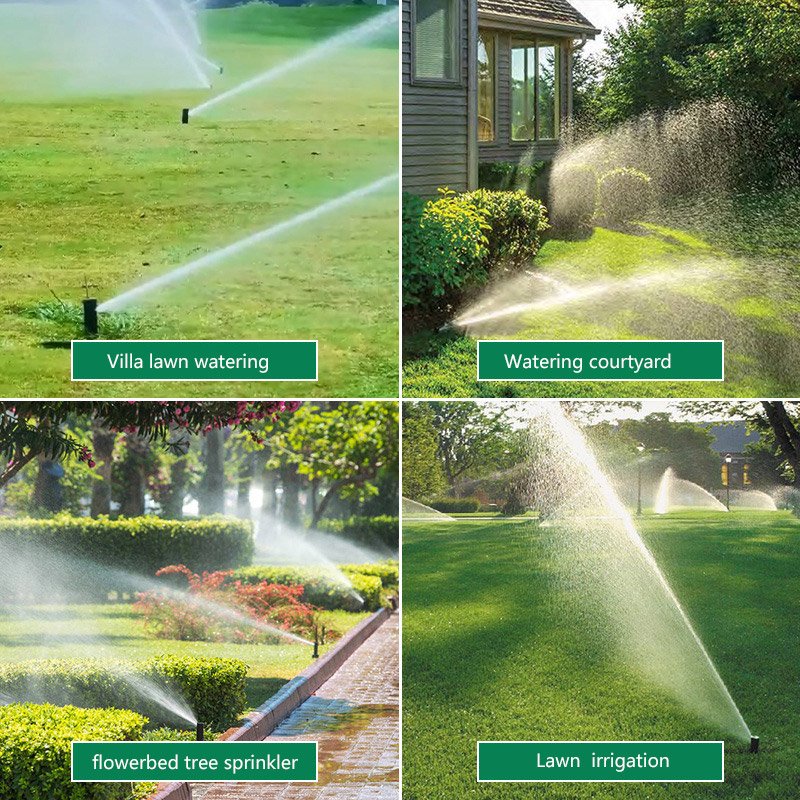
Labor Saving:Compared to traditional manual irrigation, using buried sprinklers can significantly expand the area that can be manually irrigated per unit area. When used with an automatic control system, it can even achieve zero-management, automated irrigation.
Rotating sprinklers can be an excellent choice for large lawns, as their efficient coverage can reduce the total number of units needed, ultimately lowering installation and maintenance costs.
Aesthetics:Different types of buried sprinklers produce different water patterns, including diffused, ray, and rain curtain types. The spraying effect of buried sprinklers is aesthetically pleasing, becoming a new scenic feature in urban green spaces in the modern era.
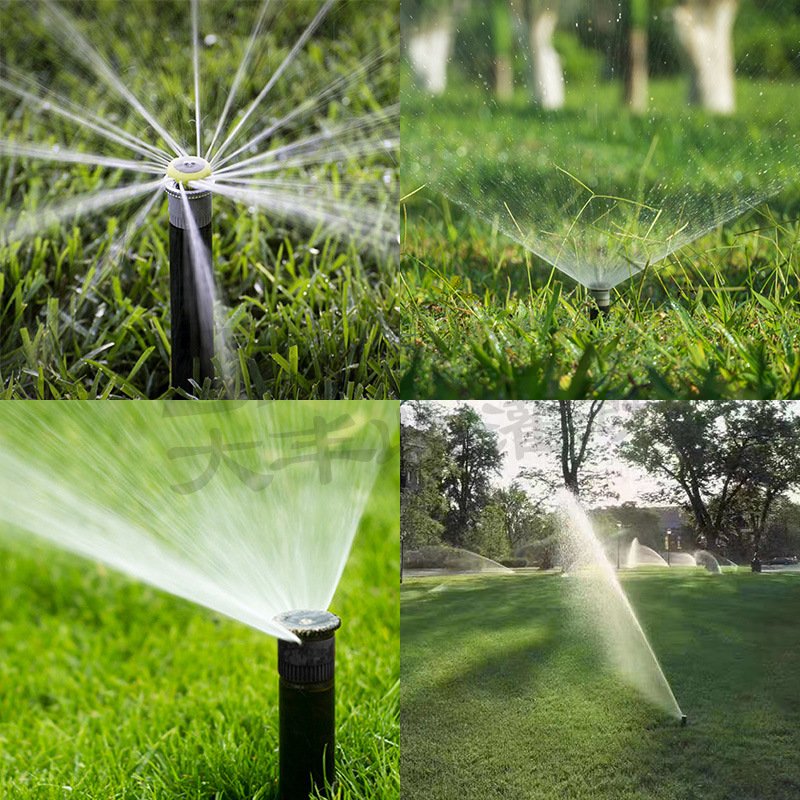
Ray sprinklers, with their unique design, can enhance water efficiency while providing an attractive aesthetic. They can be particularly useful in ornamental gardens where visual appeal is paramount.
Each of these sprinkler types offers a solution tailored to specific landscaping challenges. By carefully choosing the right combination, homeowners can create an eco-friendly and visually stunning environment.
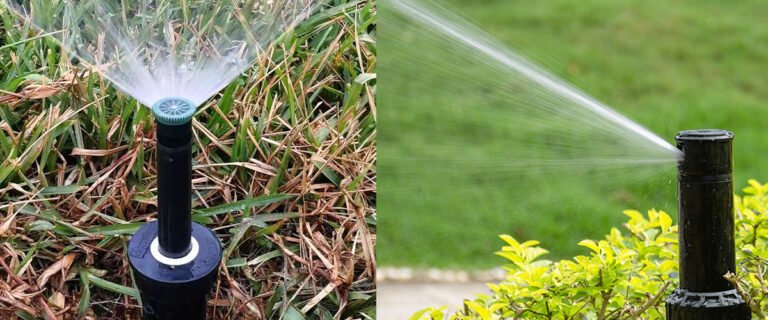
1.Buried diffuser nozzles:
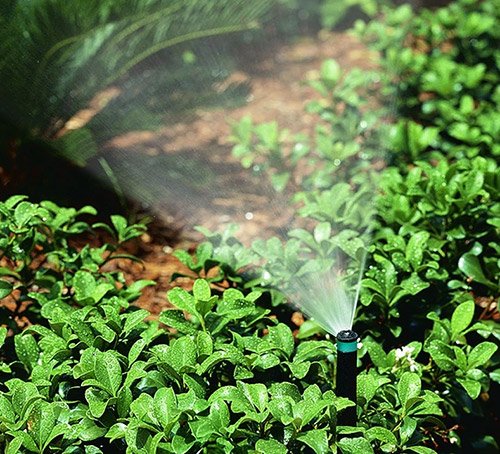
In-ground diffuser nozzles are the oldest type of in-ground sprinkler in landscaping. They work by using water pressure and the nozzle to spray water evenly in a diffused pattern, creating a surface cover. The spray radius of an in-ground diffuser nozzle is approximately 3-5.5 meters, and the flow rate is approximately 0.11-1.21 m³/h.(Representative products include the American Keye 7800 series and the American Rainbird 1800 series.)
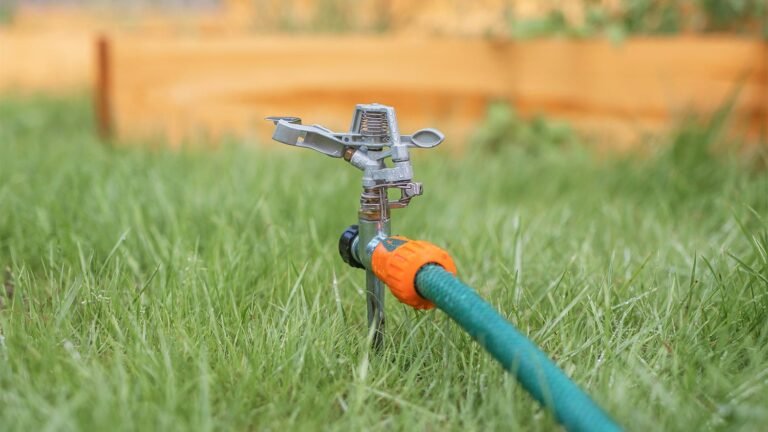
2.In-ground rocker arm sprinkler
Buried rocker arm sprinklers are a type of sprinkler head where the rocker arm spraying head is buried underground, with a spray radius typically around 10 meters. However, due to their large exposed top area, complex spray angle adjustment, and excessive flow rate, they have been largely replaced by gear-driven rotary sprinklers.Representative buried rocker arm sprinkler heads include the Leo 7330 series from Israel.
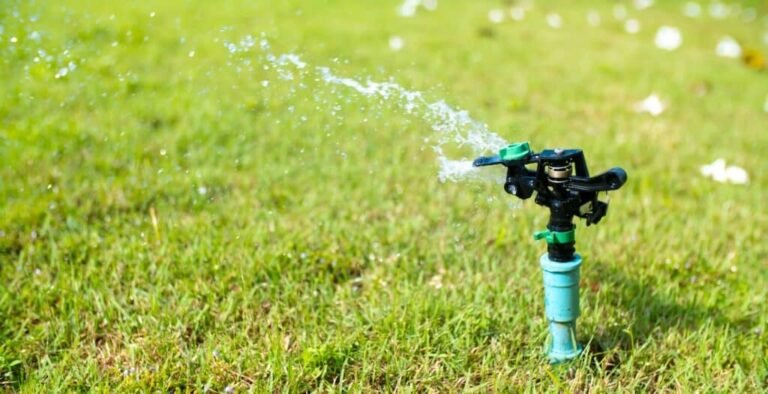
3.In-ground rotating sprinkler
In-ground rotary sprinklers are the most widely used type of sprinkler in garden irrigation. Their main working principle is that water flow drives an impeller inside the sprinkler head, which in turn drives a gear, causing the sprinkler head to rotate at a constant speed during spraying. Therefore, in-ground rotary sprinklers are also called gear-driven sprinklers. In-ground rotary sprinklers have a relatively large spray radius, ranging from 5 meters to 25 meters depending on the product specifications. Some large-diameter specialized sprinklers can even achieve a spray radius of over 30 meters.
Representative products include: US-made RPS75 series, US-made 10003 series, US-made Rain Bird 5000 series, US-made Hunter PGP series, and US-made Toro S800 series.
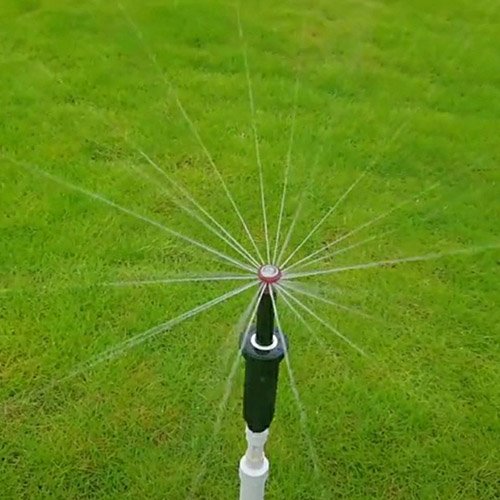
4.Buried X-ray nozzles
In-ground ray sprinklers are a type of remote sprinkler irrigation that has gradually gained popularity in recent years. Their biggest advantage is their lower flow rate compared to in-ground diffuser sprinklers. For example, at the same spray radius of 5.5 meters, a diffuser spraying in a 360-degree circle has a flow rate of 1.21 m³/h, while a ray sprinkler only has a flow rate of 0.3 m³/h under the same conditions. Furthermore, the ray sprinkler produces a radial spray pattern, which has a certain aesthetic appeal.
Representative products include: the American Koyu RN series ray sprinkler and the American Hunter MP series ray sprinkler.